

This is the second installment of the post, Mosque: Form and Function. In the first post I discussed the form and function of a mosque, and highlighted the two most important mosques in Islam, the Mosque in Mecca and the Prophet’s Mosque in Medina.
This post and the following posts will briefly cover some of the most renowned mosques in the world. These mosques are scattered over a large geographic area stretching from Isfahan to Istanbul built by Muslim Kings as a symbol of their power and prestige. These grand mosques had little religious significance but represented the cultural and architectural achievement of their respective era and dynasty.

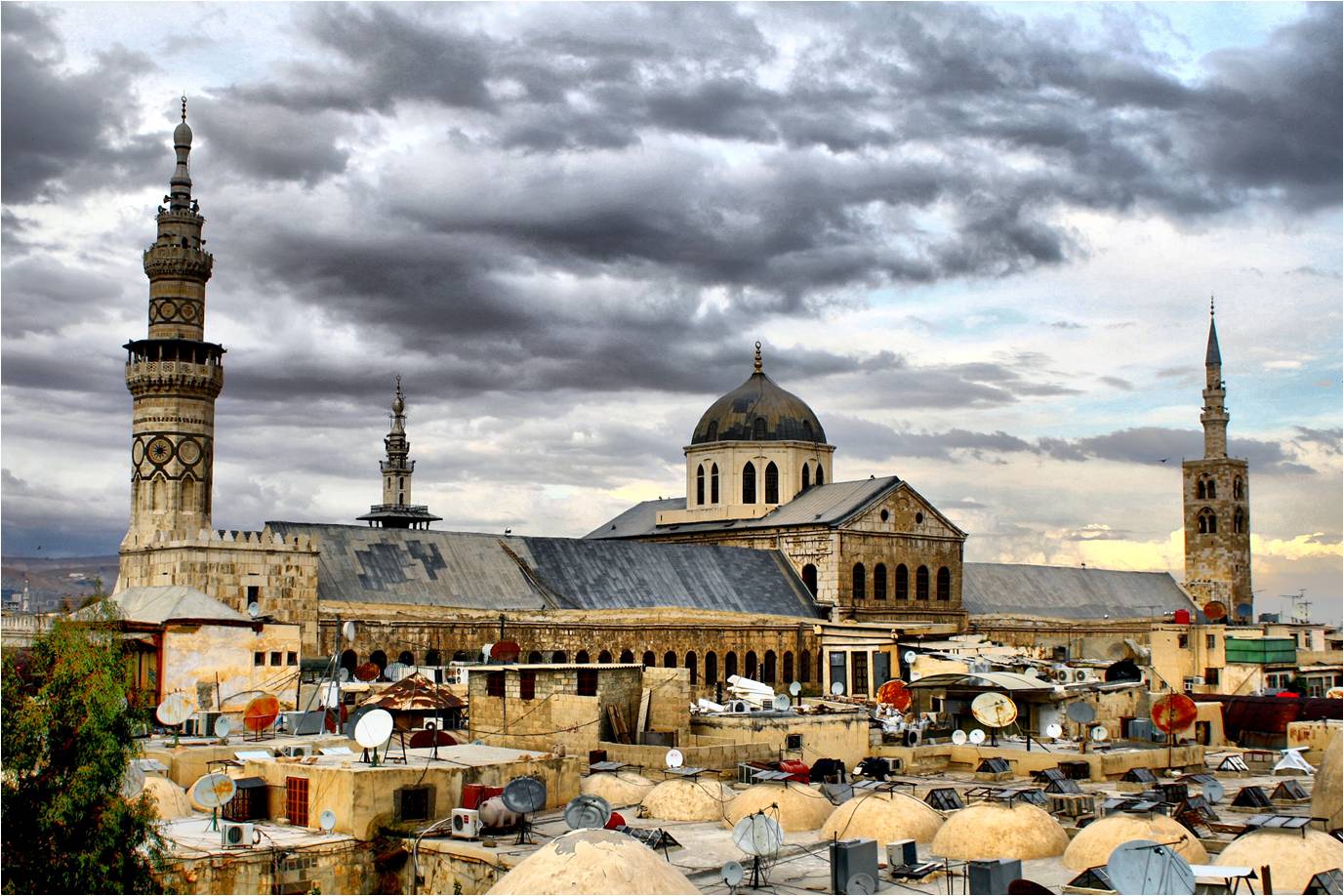
The Umayyad (661-750) established their Khilafat in Damascus, Syria, which was a Roman province for almost one thousand years. The mosque was built by Caliph Al Walid (705-715) at the site of the Byzantine Cathedral of John the Baptist. Syrian craftsmen were employed in the construction of the mosque and the Byzantine influences are apparent in its architectural style. The inside of the building is covered with beautiful Byzantine mosaic works. The roof of the central part of the prayer hall is reminiscent of the Nave of a church. The Dome and minarets are distinctly Roman in style and construction. The square minarets are similar to the bell towers of a church. The construction of the first grand mosque in the Muslim world was heavily influenced by the Roman architecture that was prevalent at that time in Syria.

According to lore, the head of Saint John was buried there and later discovered during the construction of the mosque. There is a little chapel inside the mosque marking the site where head was reburied. The Chapel of Saint John is a popular site for pilgrims who come there to pray. The mosque, almost 1300 years old, is an architectural masterpiece visited by thousands of people every year.

Leave a Reply to Mosques II: Ummavi Mosque Cordoba (785-961) | PlaNYourCityCancel reply