

In around the same time it takes me to travel from D.C. to Boston on Amtrak’s Northeast Corridor (NEC), I was whisked from Guangzhou to Luoyang, one of China’s ancient capital cities – roughly the distance from Dallas to Chicago (or double the mileage on the NEC) in a little over 7 hours by rail. (Flying would still be faster over such a long distance, but HSR often makes more sense between closer cities in China.)
In only a few decades, China has built the world’s most extensive high speed rail network, even connecting western Xinjiang to the network, on a line which cannot even pay for its electricity costs through annual revenues. But for China, the positive externalities outweigh the costs, and whether that’s cementing control across restive regions by increasing Han investment, or building denser, more dynamic, sustainable, and prosperous cities, China is plowing ahead.


The Chinese high speed network, built largely within the past decade, generally operates along the periphery of built-up areas so as to minimize eminent domain costs when constructing the right-of-way. Chinese HSR also generally operates separately from China’s older, slower, more affordable legacy railroad network, which tends to have stations closer to or within existing CBDs, and shares trackage with freight rail. Although traveling to a HSR station is often similar to traveling to an airport at the outskirts of a city, Chinese cities are growing so rapidly that quickly, most of these stations will be enveloped by skyscrapers and shopping malls – and most are already connected to metro systems and BRT lines. Skyscrapers can be built right next to (or atop) train stations, but airports generally need to remain on the periphery of a city (or enforce strict building height limits, as is done in Boston, where the downtown is very close to the airport). So, generally, traveling to a train station can be much more convenient (fast) in China.
Even though security to enter HSR stations in China is almost as strict as entering airports, traveling between nearby cities is usually as fast or faster than taking a plane, and the service is punctual and rarely delayed. In the US, flying is often faster even between relatively nearby cities, even though airports are generally farther from downtown areas than train stations, and require going through security. Freight railroads own the tracks and set Amtrak’s slow schedules outside of the NEC. In addition, many US cities do not have extensive or fast (punctual and frequent) rapid transit networks, so driving would be required to get to the train station just as it would be needed to get to the airport, and many train stations have been moved from downtown areas to the outskirts of US cities to allow for more parking. What’s the benefit of arriving in a new city on the train instead of a plane if you still need a car to get to your destination?


Grand Central Terminal, Penn Station – these hubs were also built on the outskirts of the city when they were built. Land was cheaper and real estate could be developed to maximize profit – and so while the New York and Harlem Rail Road continued south, the main terminal would become Grand Central. (The New York and Harlem Rail Road’s Madison Square depot became the first Madison Square Garden and the Murray Hill Tunnel remains as evidence of a former at-grade steam railroad heading south.)
Grand Central Terminal was constructed for 2 billion dollars in today’s money, while today’s new WTC hub was twice as expensive. What’s more, Grand Central’s reconstruction in the early 20th century was actually extremely profitable for the New York Central, as they decided to electrify the entire complex, and bring it underground, so that real estate could be sold for Terminal City. They also rebuilt the terminal because of the Park Avenue Tunnel wreck, caused by poor visibility due to a lot of emissions from steam locomotives, which were far less efficient than electric locomotives or diesel locomotives, invented later. The Park Avenue Tunnel was built underground (while other railroads ran along the streets) because Park Avenue was already a corridor of wealth and influence. The tracks are elevated in Harlem, and there are advertising and real estate opportunities below the tracks, such as La Marqueta.

But back to China… How could they build so much, so quickly, while NYC has less trackage than it did in the 1950s, with many elevated lines abandoned and sold for scrap? While the NY region struggles to build the next phase of the Second Avenue Subway or the new North River tunnels and has spent years planning for Canarsie Tunnel repairs, China has tunneled miles upon miles of HSR tracks, keeping routes straight and level and saving on land acquisition costs. In Luoyang, people were complaining that their entire metro system was taking more than 1 year to build – there were delays due to uncovering many artifacts in an ancient city. But with relatively no significant environmental rules, private property rights, or labor/safety rules, and cheap labor working 24/7, they are able to build as quickly as the US built in the early half of the 20th century.


The US today, of course, shouldn’t be compared to China – and it’s good that our construction workers have much higher safety standards now than in the past. And it is still possible for US government agencies to build quickly and efficiently, if they are politically motivated; the I-35W Bridge in Minneapolis was rebuilt 1 year after the collapse in 2007. And in the more distant past, NYC built the IND, the US built the Interstate System, and NASA landed on the moon. Most recently, the MTA has been able to replace a LIRR bridge in one weekend. But the truth is, mass transit isn’t a priority in this country anymore.
But these types of articles don’t get to the root problem for why the US is more car-centric, and why there is more sprawl (and why it is thus more expensive to acquire land to build HSR). The US is more individualistic and heterogeneous. It was born from a rebellion against taxes and fought a Cold War against communism. The south enslaved millions and developed a racial caste system. So public goods benefit the “other” and urban and suburban/rural interests become polarized not just due to general trends but due to campaign finance laws and gerrymandering. Perhaps this helps to explain why Canada generally has better public transit. (And why projects are cheaper abroad, since health care costs are not covered by the employers.) Some wealthy people want to reduce government except where it benefits them (such as restrictive zoning). Regional systems that could be more efficient are shelved and hundreds of small towns end up providing services that could be streamlined – if with the right incentives more similar to a public utility, and not like how the MTA “unified”.

In Hong Kong, the MTR is profitable even without its real estate portfolio. It is a privatized company and operates far more efficiently than the MTA. Their OTP is 99.9% and their fare is low (and their farecards can be used to purchase most things in the city).
Besides the fact that it is a privatized company listed publicly (with government as majority shareholder), the MTR also is successful due to the density of Hong Kong and formalized coordination between land use and transportation. Just as the British first leased the majority of their Hong Kong territories, the Hong Kong government today leases land to developers and maintains tight control of supply in order to keep housing prices high, and provide a steady stream of government revenue. This allows taxes to be extremely low and allows Hong Kong to be a global center of finance, and it also allows for extremely high MTR ridership. Thus Hong Kong is dense (preventing much suburbanization and massive car ownership) not only due to the mountainous terrain and the political boundary with China, but due to a unique central planning system. Much land in Hong Kong is actually still undeveloped, contributing to the astronomical cost of housing in the city. This isn’t good, and ideally Hong Kong could increase taxes if needed in order to increase housing supply, grow the city, and prevent unrest and population decline. But, it does allow the MTR to have low fares and high profits (and the Hong Kong government’s revenue collection practices mirror those of the MTR’s, with their Rail+Property model).
While this system is definitely not perfect and cannot be easily replicated elsewhere, NYC could make small strides to be have healthier incentives. NYC is probably the only US city which can have a profitable mass transit system; most commute via public transit. If the MTA cared about its customers because they provided 100% of their revenue, they would provide better service. They would want to improve and expand and not hide behind an unaccountable veil of bureaucratic myopia. As a first step towards privatization, the MTA could receive subsidies based on ridership, after accounting for planned work, holidays and other factors (akin to a public utility model). Later on, customers unable to pay can receive transit stamps (we don’t directly subsidize supermarkets). Station complexes, elevators, escalators – these can be easily outsourced for private maintenance quickly. Efficiency would improve, money saved, service improved. For the MTA to be truly concerned with service, it needs to care first and foremost about its customers — not the politicians and not the press.
Yes, the NYC subway is older than the MTR’s system, but that’s not an excuse for a lack of maintenance; after all, there are many older marvels of engineering in the world which are better maintained and better functioning today. Yes, New Yorkers are not as comfortable with density as they may have been in the past (and they can protest, which is a lot harder to do in Hong Kong). And yes, New York had a history of white flight which did not happen in Hong Kong and their government is more centralized; imagine if NYC worked with the MTA, a state authority, to rezone along a new stretch of subway and finance it through value capture without neighborhoods blocking the tall buildings.
But the NYC subways were also profitable and much more efficient prior to government regulation forcing bankruptcy and unification. NYC didn’t even allow the IRT/BMT to have advertising or retail besides small newsstands. Unification allowed for many improvements, such as the Chrystie Street Connection, but there’s more work to be done. The same is true for Amtrak…
Robert Moses didn’t seem to have an issue raising toll revenue for the TBTA (while the subways were stuck with a nickel for decades). The public authority model worked well under him, in that he could get things built independently (though still left plenty unbuilt), but our society is rightly more democratic these days. And the public authority model may not work as well under these conditions; now it seems to allow people to hide in a lack of transparency and lack of public interest, allowing costs to soar above and beyond peer cities which also have high salaries and complex infrastructure, it seems mainly because no one reins in union demands. But clearly, something is broken when politicians don’t want to start projects that they know won’t be finished (or even started) until after they leave office.

In China, reactivating an existing right-of-way like the Rockaway Beach Branch could be done in less than a year – maybe even in less than a few months. China’s three largest metropolitan regions have a combined population greater than that of the United States, and they are rapidly developing and being linked together. Protesting is illegal and NIMBYism cannot flourish in such a repressive environment. On the other hand, the US has difficulty planning beyond political boundaries and building visionary new infrastructure.


From the 3rd Avenue El and 9th Avenue El in Manhattan and the Bronx and all the lost stations along the way, to the NY and Putnam Railroad and South Brooklyn Railway, the NY region used to have much more rail infrastructure. Much of this was deemed redundant after subways were built (such as the IND Fulton Line replacing the BMT Fulton El), but much wasn’t replaced; the LIRR Bay Ridge Branch and LIRR Lower Montauk Brach, for instance, could be important links if reactivated for passenger service, allowing for more housing and development. But until costs are brought down, these projects may be too difficult to get off the drawing board.
The LIRR Bay Ridge Branch in Queens and Brooklyn:


The LIRR Lower Montauk Branch in Queens:


The cost to extend the 7 train and create one station that already leaks was $2.1 billion per mile. The Second Avenue Subway is $2.7 billion per mile. Since these stations are using plenty of escalators rather than stairs, costs will rise further in order to repair them. Similar projects in expensive cities with an equally complex spaghetti of existing infrastructure underground are a lot cheaper to build. The Toei Oedo Line in Japan cost $560 million per mile. The Berlin U55 cost $400 million per mile. The Paris Metro Line 14 cost $368 million per mile. These are not Chinese systems, built with cheaper labor and weak private property rights. Until the MTA cuts out the waste, fraud, and abuse, and lowers the cost to renew, enhance, and expand, we are going to be bursting at the seams. New York is an expensive city, but it needn’t be this way. Government spending in NYC is larger than all but two states, yet much of this funding goes to waste every year. The city also sends more than 11 billion dollars more to the federal government than it receives back, and an additional 4 billion more to NY State than received in return.
There are also many abandoned assets which can be reopened for retail or tourism; the Transit Museum could make ample revenue by capitalizing upon existing assets, or doing more films or tours in one of the most visited cities in the world. They have many historic trains and buses to utilize, and there are profitable routes to market. The Brooklyn Bridge was financed by numerous passageways and compartments in its anchorages; New York City rented out large vaults in order to fund the bridge, and these vaults were used to store wine due to their stable temperature. Today we need more creative financing strategies as well. (The bridge originally had tolls, but they were removed due to short-term election considerations in 1911; now, DOT bridges have no truly stable source of revenue for maintenance, and the City competes with the MTA for funding).

The NYC Subway itself has a solid backbone from which to operate stellar service, with many 4 track corridors and ample flexibility for rerouting. Separated from traffic and built right beneath the surface for quick access, with express tracks and running 24/7, the NYC Subway was built for speed. (This contrasts with our roads, where Vision Zero is working to slow down vehicles because the majority use public transportation and most private cars are simply stored for days on end in the public ROW).
Public-private partnerships (P3s) can be a tool for reducing costs, whether for decking over rail yards, building apartments above schools and libraries (but maybe not sewage plants), or contracting out maintenance. Brooklyn Bridge Park is financed by real estate development, and municipal property can override local zoning with mayoral approval (though the State Legislature needs to get involved if developers want to build on parkland.) State authorities can also disregard local zoning, but in practice, as public agencies working for their constituents, they work with NYC institutions and collaborate where their expertise may be lacking; for instance, the NYC Department of Buildings certifies construction, but only if projects adhere to local zoning.

America has spent trillions on the Iraq War supposedly to keep us safe, but more of us die from bad roads, climate change, and broken infrastructure. Getting people out of their cars reduces pollution, increases efficiency, provides access for all, and reduces death – as long as mass transit is operated well and politicians prioritize it. Better transit can allow for more housing, lowering rents, prices, and alleviating displacement.
Today, so many commuters pour into Manhattan from other boroughs and elsewhere that it doubles the island’s daily population from 1.6 million to 3.1 million, and there is so much potential for improvement. Better transit makes neighborhoods more sustainable, efficient, prosperous, walkable, healthy, affordable, and equitable. The subway allowed for NYC to grow into a dense, global city reaching far beyond the tip of Lower Manhattan, with cleaner air, safer commutes, increased mobility, decreased congestion and noise, and better health all among many other positive externalities. Visionaries saw the future and built the infrastructure that we continue to rely on, from water tunnels and sewage plants to telecommunication infrastructure, steam and gas lines, and roads. Manhattan’s street grid could allow for a robust bus rapid transit network, if only the will was there to make it a reality.


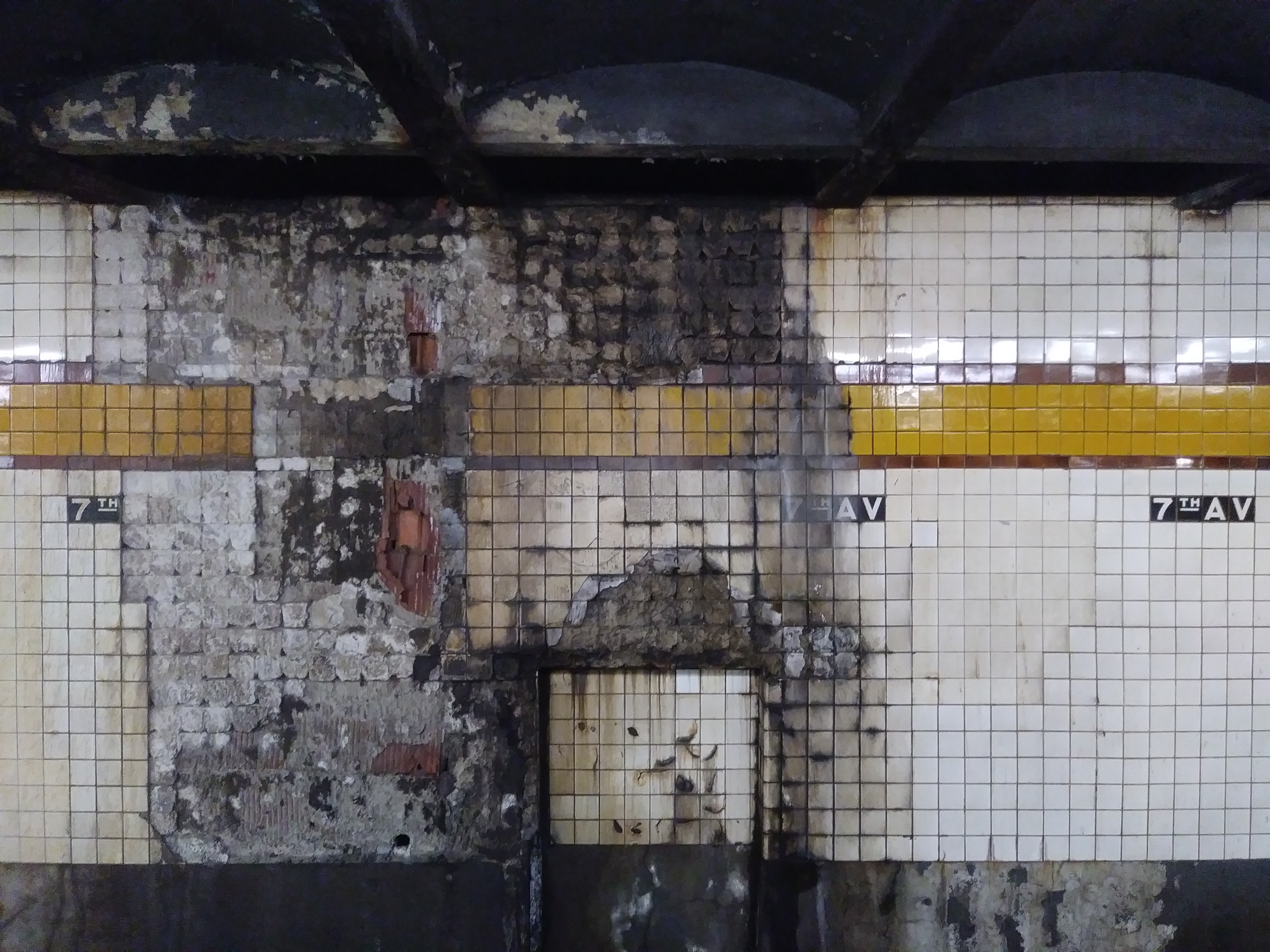
Now is the time to think big, invest for the future, and get projects built quickly and cheaply. Or at least, better maintain what already exists and keep out leaks…


Note the PlaNYourCity address is now PlaNYourCity.nyc
Follow our Instagram for our latest whereabouts or join us on a walking tour!
More photos of Chinese infrastructure:


Leave a Reply