The MTA’s Missed Opportunity

Long Islanders cheered Andrew Cuomo when he intervened in the recent dispute between the MTA and LIRR workers, who had threatened a strike over demands for wage increases. When negotiations stalled between the LIRR, which had demanded a 14% raise over six years, and the MTA, whose offer to spread the same raise over seven years the LIRR refused, Cuomo decided to force the MTA’s hand and mandate a 14% raise over 6.5 years.

This solution will win Cuomo some election-year gratitude from Long Islanders, and it may seem to be an reasonable compromise. It is not. The LIRR, workers and management alike, has routinely demanded far more than it deserves from the public while delivering subpar service in return. An LIRR strike would have offered the first chance in possibly decades to fix the LIRR, unburden the MTA of supporting a corrupt department, and give Long Island the efficient, inexpensive rail service that it needs. The compromise is a bad deal for the MTA, for Long Island, and for the entire public.

Implicit in the LIRR’s demands about cost-of-living increases was a statement that an LIRR salary was insufficient to support a household. This statement does not withstand scrutiny. LIRR workers are already well compensated even in base salary. A New York Times report from 2010 reported that one train engineer earned $75,000 in base pay alone, already well above the US median.

This does not address the many ways—some of them illegal, some of them merely rent-seeking and unbecoming a public servant—in which LIRR can supplement their paychecks. The MTA is hampered by the LIRR’s archaic and often absurd work rules, of which this is only a sampling:

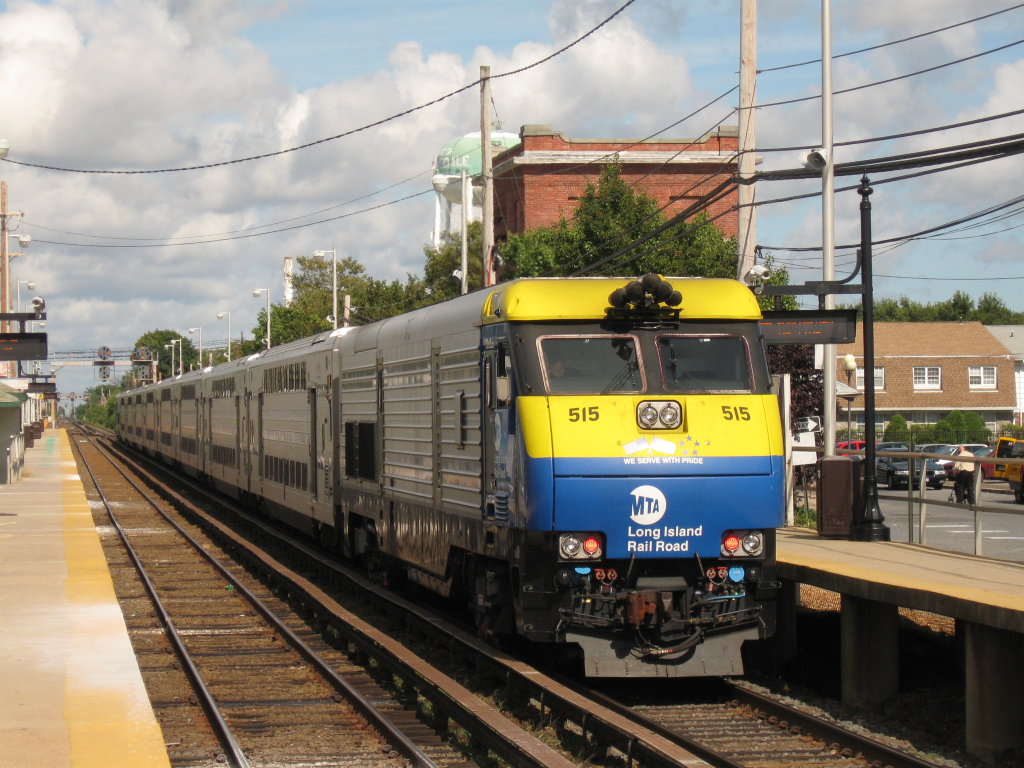
  • LIRR workers who operate both an electric and a diesel train in the same day – even if only to move it a few hundred feet – are entitled to an extra day’s “penalty pay.”  This produces operational nightmares: for instance, the MTA must often keep redundant engineers idle, often on overtime, just in case an electric train needs to be moved and the only other available crew members have already worked with diesel trains. If this was ever justified on the grounds that diesel and electric trains require different skills, it certainly is justified no more: the LIRR uses a certain GE locomotive in both diesel and dual-mode diesel/electric versions; the dual-mode locomotive counts as electric for this work rule, even though it and the pure diesel version have almost identical controls.
  • Engineers and conductors receive double their usual hourly pay for operating trains other than their regularly assigned one, even on the same line with the same equipment. This means, for example, that if the crew of a delayed inbound train is scheduled to take over an outbound train, LIRR dispatchers face an unappealing choice behind delaying the outbound train as well and paying a different crew double to take the train out on time.
  • Because of inefficiencies in crew scheduling, many LIRR workers are actually scheduled for time-and-a-half overtime every day; this (instead of unpaid overtime resulting from, say, service disruptions) comprises half of the LIRR’s overtime payments.
A DE30AC dual-mode diesel/electric locomotive, built for the LIRR by GE. An LIRR driver who operates one of these locomotives and the DE30MC diesel-only version, which has identical controls, is entitled to an extra day’s pay, a legacy of work rules negotiated decades ago for antiquated equipment. (Image: Wikimedia Commons)

And needless to say, there is the recent scandal in which massive numbers of LIRR retirees collected fraudulent disability benefits, about which enough has already been said.

And for paying these premium prices to the LIRR, does the MTA get premium service? Not quite. Commuter rail in the United States is generally much less efficient than European commuter rail systems, which run better trains with fewer employees on board. But even by American standards, the LIRR is strikingly inefficient. The LIRR received an operating budget of $1.8 billion in 2013, compared to Metro-North’s $1.4 billion. Despite this, the LIRR carried slightly fewer passengers than Metro-North, 81.8 million compared to 83.0 million, and charges substantially higher fares—for example, a monthly ticket from Grand Central to Stamford costs $307, while a monthly ticket from Penn Station to Ronkonkoma, a station of similar importance and distance from Manhattan, costs $363.

And this does not even begin to discuss the intransigent and obstreperous management, who are proud of their status as the world’s oldest railroad still operating under its original name, and thus notoriously loath to change their ways and cooperate with anyone. An MTA plan to run more Metro-North trains to Penn Station along a segment of tracks currently monopolized by the LIRR encountered fierce criticism by Long Island residents, and the LIRR’s former president Helena Williams, who insisted that the LIRR “owns” the tracks into Penn Station—never mind that they were paid for and maintained by public money from the whole metropolitan area. The ongoing East Side Access project, building a connection from the LIRR tracks to Grand Central, is estimated at more than $6 billion per mile: twice as expensive as Second Avenue Subway, and ten or more times average construction costs for the first world. Most of the expense in the project comes from the excavation of a new sub-basement terminal underneath Grand Central for the LIRR’s exclusive use. Grand Central has the most tracks of any train station in the world, yet is far from the busiest; certainly there would be space for LIRR trains in the existing station, but this would have required cooperation between Metro-North and the LIRR. The result: a piece of useless infrastructure that costs New Yorkers billions.

Construction of the new Grand Central sub-basement station for LIRR; the amount of deep-level excavation required makes East Side Access the most expensive rail project per mile in the world. With better cooperation between the LIRR and Metro-North, several billion dollars could have been saved by making better use of the existing Grand Central tracks instead. (Image: MTA)

The LIRR needs to be fixed. Its overpriced workers and overbuilt infrastructure have cost the city dearly, and the strike settlement will only worsen this. Some of the money for the LIRR’s raises will come from additional taxes and debt, to be paid by New York’s clerks, electricians, chefs, and workers in thousands of other professions that do not make top-quintile salaries for subpar work and have not defrauded public agencies of millions in disability benefits. Some of it will come from worsening service for people elsewhere—the MTA has already announced cuts to its capital plan, which funds badly needed projects such as the Second Avenue Subway, to pay for the settlement. And some of it will probably come from raising ticket prices even higher, squeezing Long Island commuters and strangling the economy of the whole region.

Looking even further ahead, any serious planning of new rail transportation needs to consider the needs of the region as a whole. Following best practices in Europe, this should include cutting LIRR fares within the boroughs to subway levels and bringing the LIRR and subway under the same payment system. It is also common outside the US to run commuter trains through downtown stations instead of having them stop and reverse direction. (This is how the NYC subway works, as well: no one would propose splitting the 2 into a line from the Bronx to Penn Station and a separate line from Penn Station to Queens, requiring anyone traveling from one side of 34th Street to the other to transfer.) Through-running improves operational efficiency, lets people take jobs on the opposite side of Midtown from their houses without a transfer, and the most expensive piece of required infrastructure—tunnels through Penn Station from New Jersey to Long Island—already exists and is used by Amtrak every day. Through-running would be possible for the small cost of re-electrifying some of the LIRR lines with the overhead wires used in New Jersey, feasible for $3 million per mile and a year or two of construction work. But it is hard to see how any of this could work without the LIRR changing its current get-off-my-lawn approach to cooperation. Even today, the Penn Station ticket machines cannot vend both NJ Transit and LIRR tickets, even though they could with a small amount of reprogramming.

The strike could have provided an avenue to fix a few of these problems. At minimum, the MTA could have required a complete modernization of the LIRR’s work rules—scrapping co-mingling and the other penalty fees, for example—as the price for LIRR employees to be let back on the job. If they had refused, the MTA could have hired replacements from more competent commuter railroads, used to working under reasonable rules. A strike would certainly have been painful to Long Island, but not for long: with the fares that the LIRR charges, most of its riders are affluent enough to find other forms of transportation for a few weeks. And the end result would be a more efficient and more modern LIRR that consumed less of the city’s resources and delivered better service on top of that.

Unfortunately, Cuomo’s actions stopped any chance of that. This is a victory for the LIRR, who will get a good-sized raise and keep their comfortably archaic work rules; it is a loss for the MTA, for Long Island, and for everyone who lives or works in NYC.

Connor Harris is a Junior at Harvard University studying math and physics. He is also interested in transportation planning, and serves as President of the Transportation and Urban Planning Society. He can be reached at connorharris@college.harvard.edu

Comments

8 responses to “The MTA’s Missed Opportunity”

  1. Rayn Riel Avatar

    Great post!

  2. larrylittlefield Avatar

    Fixed? I’ve given up on fixes until the serfs start organizing against their state legislators. As far as their crowd is concerned, the problem is that ordinary people and younger generations have it too good, and there is too much of the future they haven’t spent yet.

    http://larrylittlefield.wordpress.com/2014/07/01/the-executivefinancial-class-the-politicalunion-class-and-the-serfs/

  3. […] Without Work Rule Reform, LIRR Union Deal Is Nothing to Celebrate (PlaNYourCity) […]

  4. AthensOnThePatapsco Avatar
    AthensOnThePatapsco

    Slight correction. I am a commuter who lives in NYC and works in Stamford. My monthly Metro-North ticket costs $307.

    1. Connor Harris Avatar
      Connor Harris

      You’re right. I blame a confusingly formatted chart on the MTA’s website. It’s fixed now!

  5. […] contributions and the authority’s own capital budget. Absent from the new labor agreements: Work rule reforms to ensure that, in addition to compensating employees well, operating funds are spent […]

  6. […] So what can we do? Build more SBS instead of subways, and enforce bus-only lanes? Try to get rid of outdated labor rules? […]

  7. MTAnon Avatar
    MTAnon

    Connor’s latest piece…

    https://nypost.com/2018/08/25/why-nyc-is-priciest-city-in-the-world-for-infrastructure-projects/

    Manhattan’s Pennsylvania Station fills few New Yorkers with civic pride. A jumble of low-ceilinged, poorly sign-posted passageways shoehorned into the basement of Madison Square Garden, the complex crowds more than 200,000 New Jersey and Long Island commuters every weekday through its narrow platforms and undersize waiting areas.

    Its operational drawbacks are even worse. Penn Station’s ill-maintained tracks are already being used to maximum capacity, and even slight disruptions can have crippling effects. When the station was partially closed in summer 2017 for emergency track and switch repairs, dozens of rush-hour trains had to be canceled or diverted to outlying stations, where commuters crammed onto subways and buses to Manhattan, an ordeal dubbed the “Summer of Hell.”

    Penn Station also lies under a sword of Damocles. In 2012, Hurricane Sandy drove salt water into the century-old tunnels that carry the two-track connection from Penn to New Jersey, damaging their concrete lining and corroding electrical circuits. Anytime in the next several years, one of the tunnels could experience a catastrophic electrical failure or even collapse. Nothing has been done to repair the damage: Fixing one of the tunnels would require shutting it down for months, cutting the station’s capacity by three-quarters. Amtrak, which owns Penn Station, hopes that it can build a relief tunnel before the current ones break.

    In fact, such relief tunnels were almost constructed years ago. In 2003, NJ Transit proposed three Penn Station expansion plans, each estimated at slightly more than $3 billion. Construction on the New Jersey end of the tunnels had just begun in 2010, when then-New Jersey Gov. Chris Christie canceled the project, citing further cost overruns.

    A year later, however, Amtrak and the Port Authority of New York and New Jersey proposed a similar project, with seven new terminal tracks to the south of the station. They bundled the new tunnels and repairs to the old tunnels with bridge replacement and other track improvements in New Jersey, calling the combined project “Gateway.”

    Amtrak estimates that the new project will cost $29.1 billion, including $11.1 billion for the new tunnels and $7 billion for the Penn Station expansion. Any other city would consider such costs obscene.

    In May 2011, an Israeli mathematician named Alon Levy, then just out of the doctoral program at Columbia, compiled the costs of 19 rail tunnels in the United States, Europe and Japan. In Japan and continental Europe, Levy found, tunnels usually cost between $200 million and $450 million per mile; the most expensive, the North–South Line in Amsterdam, still cost only $660 million per mile, more than twice its original budget. Spain, Italy and South Korea were especially economical, building tunnels for less than $250 million per mile. (Since 2011, US inflation has increased these numbers by about 12 percent.)

    Every tunnel in the United Kingdom or the United States, though, was more expensive than every tunnel in continental Europe or Japan. And the three most expensive were all in New York City: the No. 7 subway extension ($2.1 billion per mile, despite “an unusually sparse station spacing”), the Second Avenue subway ($2.7 billion per mile, by Levy’s reckoning, but closer to $2.4 billion in final cost) and, at more than $6.4 billion per mile, the East Side Access tunneling project from Long Island to Grand Central.

    Since 2011, price tags have risen even higher. The MTA now estimates East Side Access’s cost at $11.1 billion — or about $8.8 billion per mile, under Levy’s reckoning of the project’s length. A New York Times investigation found an MTA filing with federal regulators that gave an even higher cost — $12 billion, including budget items excluded from the MTA’s public statements but not including the latest cost escalations.

    Later in 2011, at a conference on infrastructure, Manhattan Borough President Scott Stringer cited Levy’s comparison of the London Underground’s Jubilee Line extension, which cost a high-by-world-standards $720 million per mile, with the 7-train extension and Second Avenue subway in New York, which were three to four times costlier. Stringer identified New York’s excessive costs as a severe threat to the city’s prosperity.

    Indeed, more difficult water crossings in Japan and Europe have cost far less than Gateway. For example, the Seikan Tunnel, built between 1971 and 1988 to carry trains between the Japanese islands Honsh­u and Hokkaido, runs 33.5 miles, 14.5 of them underwater, and cost 538.4 billion yen, or about $6.7 billion with Japanese inflation and present exchange rates. The Øresund Bridge connects Copenhagen, Denmark, to Malmö, Sweden, by means of a 4.9-mile bridge and a 2.5-mile tunnel joined on an artificial island. The link, carrying a two-track railway and a four-lane motorway, required the cooperation of two national governments with different currencies and languages, and cost 19.8 billion Danish kroner at 2000 price levels, or $4.3 billion with Danish inflation and present exchange rates.

    The 2.3-mile Gateway tunnel is far simpler than the Seikan Tunnel and Øresund Bridge, but its $11 billion projected cost ($4.7 billion per mile) could pay for both of them together.

    Apologists for New York sometimes claim that the city’s preexisting infrastructure, geology and high land values make construction difficult. But these difficulties exist in greater measure in other cities with lower costs. European tunneling projects routinely encounter medieval and Roman-era archaeological sites, and Los Angeles is extending its Purple Line subway through the La Brea Tar Pits, full of Ice Age fossils, for just $720 million per mile, costly by world standards but cheap for the United States. Similarly, Japan has high urban land values, large earthquake zones, and stronger protections against eminent domain than the United States but much lower construction costs.

    Some of the expense problem is the fault of the American legal system. The United States, like the United Kingdom and its other former colonies, has a common-law system that uses lawsuits to resolve disputes between the government and landowners or contractors. This has made recent construction projects in London, Dublin, Delhi, Dhaka, Vancouver, Hong Kong, and Singapore more expensive than the world average, though not nearly as expensive as New York’s.

    Several factors make recent projects in New York especially unmanageable. One factor is the sandhogs’ union, which monopolizes public-sector underground construction. The sandhogs command $111 per hour in wages and benefits, with quadruple wages for weekend overtime. Tunnel workers elsewhere earn far less. For example, unionized tunnel miners in the Detroit metropolitan area earn $22.91 per hour in base pay, $39.32 including benefits; in Northern California, as expensive a place to live as New York, they make $36.12 in base pay, $59.88 including benefits.

    Worse, sandhogs insist on overstaffing projects. The Berlin-based consultant Torsten Hahm says that a tunnel-boring machine (TBM) ordinarily needs seven workers; in Germany, such a worker would be paid about $38 in wages and benefits per hour. But a December 2017 New York Times investigation into the MTA revealed that a tunneling contractor counted “25 or 26 people” — about three times what he thought was usual — working on a TBM during the extension of the 7-train line, and quoted a third-party report that “underground construction employs approximately four times the number of personnel as in similar jobs in Asia, Australia, or Europe.” An internal MTA accountant even found that 200 of the 900 underground workers on East Side Access were superfluous: They were being paid full wages, even though officials could not discern their work duties, if any.

    And for all this overstaffing, New York gets a much slower pace of work than it should. Hahm estimates that a 4.1-mile underwater tunnel in a typical geological environment, about 75 percent longer than Gateway, should take about three and a quarter years to build. The actual tunnel-boring should take 24 workers two years to complete, at an unambitious pace of 50 feet per workday. Altogether, Gateway will take eight years.

    Another part of the high costs lies in New York’s penny-wise but pound-foolish contracting. New York state procurement law usually requires that contracts be awarded to the lowest-bidding firm that passes a minimal check of “responsibility.”

    The Regional Plan Association has noted that this procedure encourages shoddy or inexperienced firms to submit implausibly low bids, ultimately costing the MTA far more in cost overruns and emergency repairs.

    For competent contractors, the MTA provides a frustrating work environment. Levy has noted that to avoid being swindled by bad contractors with lowballed bids, the MTA writes contracts in over-exacting detail. According to one person who has worked on several MTA projects, the MTA has also imposed two unusual conditions on past projects: requiring contractors to assume the financial risks created by unforeseen geological difficulties, forcing them to raise their bids to cover any contingency; and dictating a maximum salary for its consultants, with the result that the engineers legally liable for many projects earn less than some of their construction workers. Many competent contractors find this atmosphere intolerable and refuse to bid for MTA projects, reducing competition — the 7 extension, for example, had only one bidder.

    The firms that do work with the MTA, however, enjoy a comfortable revolving-door relationship with its leaders, who may be reluctant to negotiate harshly with a possible future employer. The Times found at least 18 of 25 MTA agency presidents who had left the firm in the previous two decades became consultants or were hired by MTA contractors. Many former MTA managers went to work for WSP USA, the engineering firm that designed both East Side Access and the Second Avenue subway.

    Gateway may not suffer from all these problems in the same measure. Though the MTA has significant input into its design, the project is being led by Amtrak, a federal agency. And Gateway’s cost estimates may increase or decrease as engineering and design work proceed. (A spokesman for the Gateway Project Development Corporation, a consortium that oversees the project, notes that the estimates were preliminary and would change when more about the design and contracting was known.)But the present estimates assuredly indicate something seriously wrong.

    Even at reasonable construction costs, Gateway would still be too expensive, thanks to its planners’ neglect of a half-century of innovations and best practices developed overseas. In European and Japanese cities, population growth and the increasing expense of urban land forced transportation operators to economize, streamlining organization and investing heavily in new technology and electronics.

    In America, by contrast, fractured transit agencies waste billions of dollars on obsolete operational practices and infighting.

    German-speaking transportation planners have a maxim: Organisation vor Elektronik vor Beton, or “Organization before electronics before concrete.” They mean that inefficiencies in a transportation system should be fixed first by improving coordination among different agencies, then by upgrading electronics systems and only then by heavy construction.

    Visitors to Berlin can see this maxim in effect. The Verkehrsverbund Berlin–Brandenburg, a corporation owned jointly by 20 state and local governments, coordinates public transportation over 11,794 square miles in Berlin and the surrounding region. The 38 public and private operators that VBB oversees use a completely unified fare system: The same tickets that work on buses, ferries and subways also work on longer-distance regional trains, and fares depend only on the route traveled, not on the mode of transportation. Transferring from one operator’s lines to another, unlike transferring from New York’s subway to the commuter rail or PATH, does not require paying twice.

    European and Japanese cities have also moved away from the old commuter-rail pattern of running trains from the suburbs to center-city terminal stations during the morning rush hour and leaving them there until the evening. Such an approach requires operational gymnastics or large trainyards on expensive center

    The disorganization in the US, by contrast, severely worsens operations. For example, NJ Transit and the Long Island Rail Road use different ticketing systems, and their ticket machines, even at Penn Station, cannot even sell each other’s tickets, making it impossible to pay for a trip from New Jersey to Long Island all at once. And every railroad has a separate passenger concourse and waiting area, exacerbating crowding for commuters.

    This lack of cooperation among agencies, even the MTA’s own subsidiaries, has driven up costs and diminished the benefits of several projects.

    The MTA has recently been focusing on East Side Access, a project that will give the LIRR access to Grand Central. Grand Central has more tracks than any train station in the world, but rather than building a simple connection to the existing tracks and trusting that a future through-running plan would solve capacity problems, the MTA excavated a new deep-level cavern, unconnected to the existing tracks, exclusively for the LIRR. Much of the project’s world-record cost comes from this aspect. A 2013 report by the New York state comptroller found that, of East Side Access’s then-estimated $8.8 billion cost, the cavern accounted for $1.9 billion, almost triple its initial estimate. (The cavern’s cost has since escalated to $2.3 billion.)

    The cavern was originally justified, in fact, as a cost-saving measure: By building so far underground, the MTA would avoid the need to reinforce the foundations of buildings along Park Avenue. But as costs escalated, the original plan stayed in place. One former MTA manager said the choice of a cavern was partially motivated by Metro-North’s hostility to any plan that would allow problems on another railroad to harm its own operations.

    New York’s transportation establishment will have no incentive to reduce prices to world standards as long as it can demand quintuple the world standard and get away with it. Gateway should be reduced to the minimum scope necessary to avoid a catastrophe. Larry Gould, a transit consultant for the urban-planning firm Nelson\Nygaard, has suggested one possibility: Build only one tunnel, not two, for 60 percent to 65 percent of the expense of two tunnels, and then close the old tunnels, one at a time, for rehabilitation. All other capital-expansion projects except the most trivial should be put on hold until the region’s agencies credibly commit to a set of reforms.

    Some reforms are straightforward, if politically unpalatable. If employing workers other than the sandhogs is politically inconceivable, the MTA and Amtrak should offer the sandhogs a stark choice: Work at staffing levels appropriate to a modern city or have no public-works projects be built at all. Given this choice, the sandhogs may find themselves willing to compromise.

    New York’s regional railroads should prioritize cooperation over expansion, and if necessary they should be dissolved as corporate entities and merged into one organization with unified management. The loss of an independent LIRR may upset some politicians who enjoy having some fragment of the region’s transportation system under their control, but even they might be won over by the improved service an integrated system could offer.

    Other reforms will require a more extensive investigation into state and federal procurement practices. In March, the federal Government Accountability Office announced it would investigate subway construction costs throughout the US and other developed nations, publishing its findings before year-end. In the meantime, measures to improve transparency for all government contracts could help. Many of the MTA’s contracts can be obtained only by a long and uncertain Freedom of Information Law request; others, such as its labor contracts, are entirely barred from public view. It is hard to imagine that this furtiveness with taxpayer money has a legitimate purpose. New York state should require its agencies to publish all their contracts in full.

    New York’s most fundamental problem, though, is a particular kind of provincialism. Too many New Yorkers are accustomed to seeing their residence as the greatest city not just in the US but also in the world, one that has nothing to learn from other places. But the challenges of urban governance are, at bottom, everywhere the same, and New York’s private-sector prosperity cannot cover for its complacent civil service forever.

    Perhaps Scott Stringer, back in 2011, put it best: As long as New York tolerated infrastructure prices several times greater than the world standard, he said, “we cannot build a 21st century city.”

    Connor Harris is a policy analyst at the Manhattan Institute, whose City Journal article this was adapted from. Research for this piece was supported by the Brunie Fund for New York Journalism.

Leave a Reply

Discover more from Region NYC

Subscribe now to keep reading and get access to the full archive.

Continue reading