
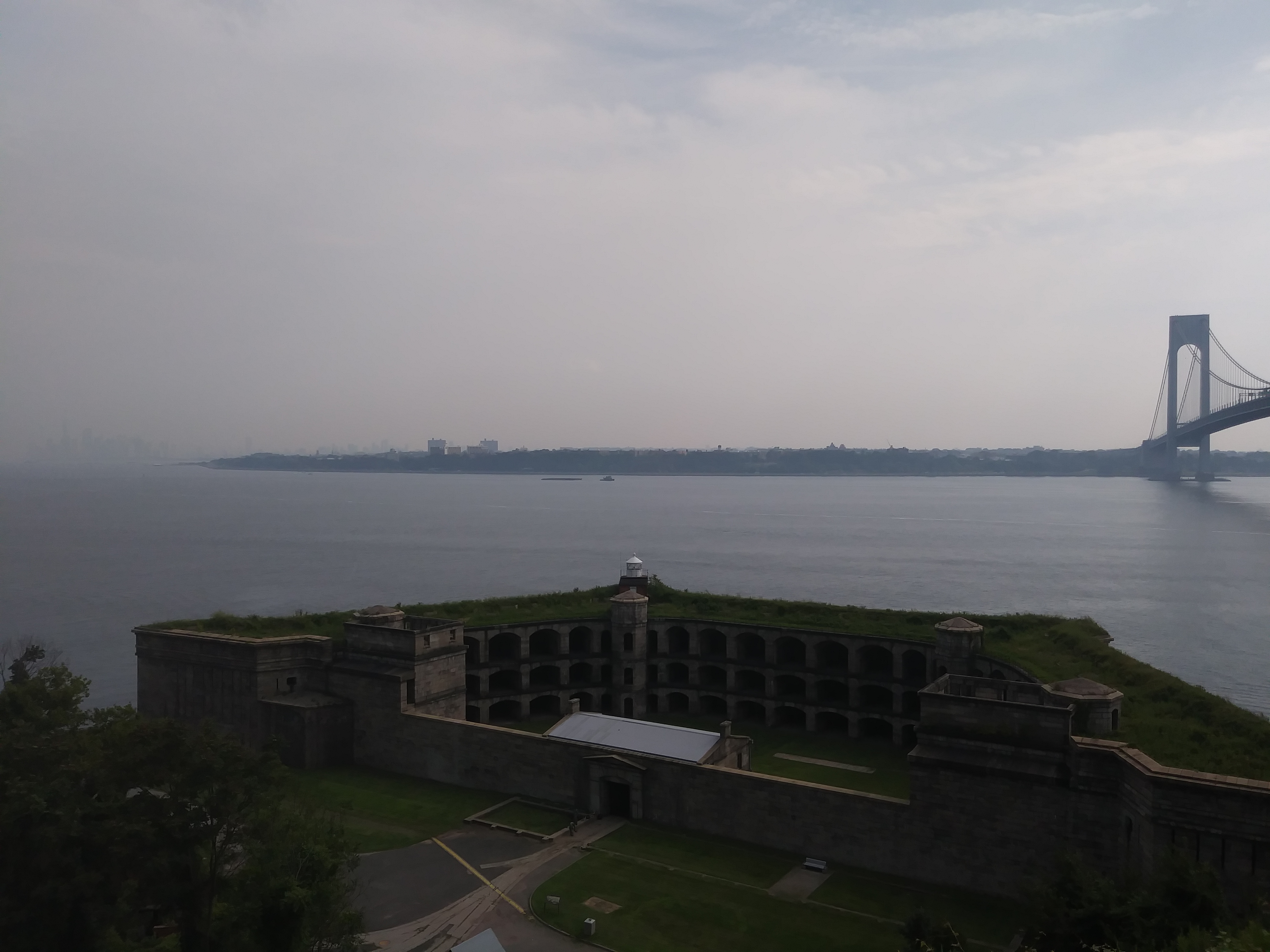


The New York region functions more inefficiently due to its municipal and state boundaries.
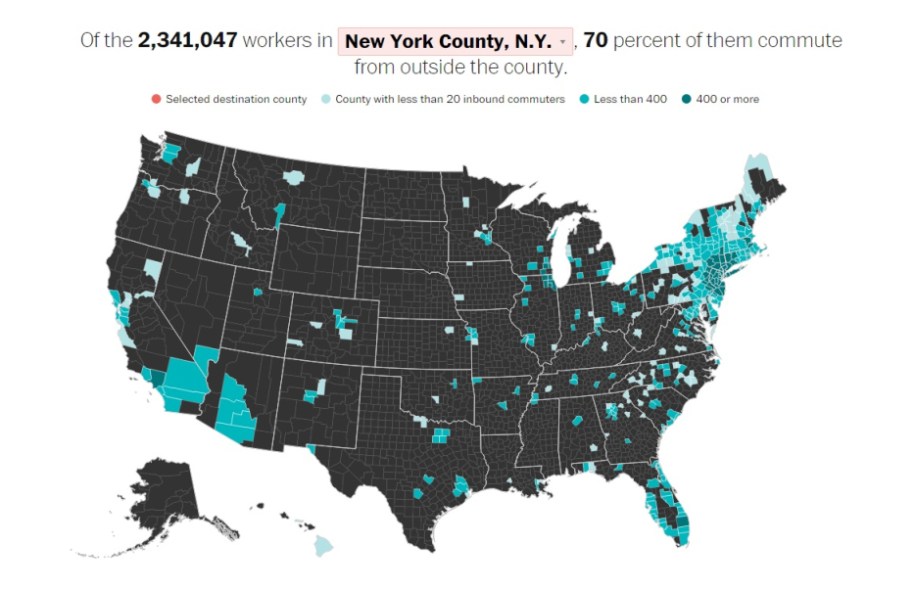
The Northeastern megalopolis is home to more than 50 million people and 20 percent of America’s GDP, centered around New York. Seventy percent of Manhattan employees commute from outside the borough. The region historically was entirely within New Netherland, but the British split up the area along the Hudson River. Today, New York, New Jersey and Connecticut are governed by state capitals that are relatively far from the Big Apple; the region is not always the priority of some of the area’s most powerful decision-makers.

Unfortunately, there are many bureaucratic barriers that keep our city and our region from being at its best. Institutional disconnects keep the Big Apple from renewing, enhancing, and expanding efficiently. Even though reform at the municipal level is already difficult, when it comes to regional planning, state boundaries interfere with progress, and the additional coordination efforts consume time and money.
With approximately as many people in the New York metropolitan area as in the entire continent of Australia, New York continues to harbor diverse and creative opportunities due to its inherent dynamism and density. The New York metropolitan area’s GDP is behind that of only eleven nations, and the region represents 10% of the nation’s economy. NY’s Pennsylvania Station is busier than Newark, LaGuardia and JFK airports combined. Long Island has more people than Ireland or Jamaica. But there are nearly 1 thousand municipalities in the region, with layers of governance and divided management for our shared infrastructure.


We need to plan beyond boundaries — and even consider redrawing the boundaries themselves.
Imagine if Newark and NYC worked together to bring Amazon, instead of competing against each other. Yes, competition is important, but it depends on the level; in this case, a national competition should arguably result in each region coming together to put together the best proposal. If Newark got the deal, and Amazon helped invest in the Gateway Program or PATH, plenty of New Yorkers would benefit too. Plus Newark arguably needed the investment more, and Amazon would have been right off the NEC, close to one of the busiest ports in the world as well as EWR. (Better yet, imagine if big government did not prevent Amazon from coming to the region at all.)


Our urban regions are weakened by political boundaries, forcing us to think small and plan small. Municipalities and states fight to attract businesses by promising the lowest taxes, while also fighting between themselves to fund transportation links. New York and New Jersey spent years debating funding for the North River Tunnels, raising costs by not streamlining the process. Resources are scarce and arguably even scarcer when regions aren’t thinking as a whole.
The Port Authority is supposed to be the entity planning beyond state borders. When the WTC was rebuilt, an opportunity existed to connect the PATH to the NYC Subway, but this was rejected for political reasons, so a $4 billion terminal was built instead, which added no significant capacity, and even shifted the terminal further west from the original Hudson Terminal, actually decreasing the speed of an average commute. That money could have been built to add capacity, or just to maintain the infrastructure existing already.
At one point, the PA was considered for operating the bankrupt IRT and BMT, but now PATH riders must pay again to ride the MTA network using MetroCard. The two systems aren’t even shown together as rapid transit lines on their respective agency maps (except on the regional map), though the PATH is also a 24/7 rapid transit service. When the PATH to 33rd Street closed during the weekend for capital improvements, the Port Authority implemented busing for passengers from the WTC PATH terminal, rather than working with the MTA to provide free transfers along NYC Transit subway routes to 33rd Street.


As a public authority, the PA was intended to be independent from politicians and short-term election considerations. Like the MTA, as a public authority, they are, essentially, a quasi-private corporation. While their board of directors is appointed by elected officials, they are exempt from many state and local regulations. They can issue their own debt, allowing them to bypass limits on state debt in order to be less risk-averse and invest without directly putting the credit of NY and NJ or their municipalities on the line. And unlike the MTA, the PA is legally self-sufficient, and does not receive any tax revenue, relying instead on profit from their bridges, tunnels, and (air)ports. Because they insulate NY and NJ from long-term debt obligations, and because they’re self-sufficient, in theory, they should be able to expedite development. Akin to the City (with a mayoral override) or the MTA, they don’t even necessarily need to follow local zoning rules or pay local property taxes (though they do oftentimes provide PILOT).
Politicians appoint the board of directors at these public authorities, and wield considerable influence, ranging from finance and real estate development decisions to performance decisions. Projects that should be prioritized by facts and figures on the ground (or below ground) often become prioritized instead for political gain, even though they may not be the most efficient or cost-effective project to commence. In addition, as an overreaction to the Robert Moses era, layers of red tape prevent decisions and keep anyone from truly being the accountable person in charge.
Private railroads built across the Hudson River, but governments now get in the way of efficient solutions. The Tappan Zee Bridge was built over one of the widest sections of the Hudson River, and it was rebuilt in the same area, even though the most efficient and cost-effective bridges are obviously built over the narrowest areas. It was built here partly so that New York wouldn’t have to share control with New Jersey, as it’s beyond the Port Authority’s jurisdiction.


Our 50 states drive our political system, but it is our regions that drive us. Socially and economically, many Americans are more connected to their regions than their states. Infrastructure lines cross state and national boundaries in order to form metropolitan clusters, but political boundaries make infrastructure spending difficult to coordinate. They also make it difficult to operate services. For instance, at Penn Station, the country’s busiest rail station, a lack of through-running leads to a lack of service and more congestion and delays. Extra time checking for passengers before (reversing) and (dead)heading to yards costs money, too. In addition, maps showing all regional services are rare to find, but should be more visible.
Since creating a 51st state in order to coordinate the New York region is highly impractical, can we reorganize otherwise? Brooklyn used to be its own city, which itself was a consolidated city from various towns. Eventually, Brooklyn was annexed controversially into greater New York. The Brooklyn Bridge catalyzed this consolidation, and the New York City Subway would eventually connect most of the then-built-up-areas in four of the city’s five boroughs. But while various cities and towns consolidated into Greater New York, the bustling cities across the Hudson River could not be annexed. The Dutch called the Hudson River the North River, and it formed the spine of New Netherland, a unique cultural nation, just as it would later become a central corridor for the Erie Canal and the metropolitan region.
Due to the ease of interstate commerce, private, profitable railroads were successful in tunneling and ferrying across the river and across state lines. The Hudson and Manhattan Railroad built rapid transit tunnels into Manhattan, to their Hudson Terminal headquarters, and to 33rd Street. Most railroads, however, terminated in New Jersey, and passengers and freight would then be ferried across the harbor.


While private railroads in the region were capable of planning beyond boundaries, it became difficult for them to do so once they faced bankruptcy due largely to government regulations and interference. Pennsylvania Railroad merged with the New York Central and the New York, New Haven & Hartford Railroad to form Penn Central, but this did not do much to help. Similar to the unification of the NYC Subway’s IRT, BMT, and IND, integrating operations, personnel, and equipment was complicated due to clashing cultures, incompatible equipment, and union contracts. Amtrak would later have the same problem, inheriting a railroad fleet that needed to be replaced with a unified Amfleet, and inheriting deteriorated track conditions that needed to be fixed before trains could run smoothly and on-time, so that personnel could work less overtime and operating costs could decrease. It takes a lot of skill and hard work to unify organizations in order to cut administrative and other costs.
Motorists are able to use E-ZPass throughout the region, but Penn Station remains a bottleneck, and fixing it requires a lot of additional time and money spent coordinating between different agencies. Like our region’s airports, this station was not designed for so many people, especially in its current state, so people are forced to squeeze and shout, and certainly not stay and dine, as is common at Grand Central. The station’s owner, Amtrak, leases it and associated trackage rights to NJT and LIRR. Vornado also owns some of the retail in the station, along the Penn Plaza side of the main corridor, which adds another stakeholder to the mess.


We need to thrive across disciplines, divisions, and departments, and bridge divides socially, economically, politically, physically, and visually. We need to plan beyond boundaries, and communicate, manage, streamline, and solve interdisciplinary problems on time, and of course, under budget. Bridging institutional disconnects and planning beyond boundaries in order to regionalize will be key to keeping America socially, economically, politically and physically on track in the 21st century. Better yet, by greatly limiting the power of government to interfere with progress (so that regional entities are not even necessary, and big government cannot derail common sense), the NY metro would be ushered into a new world of prosperity.

Government used to be able to build big, constructing everything from New York’s water supply system to its highways. We can again, if we improve our governance structures, provide healthy incentives, and limit the bureaucratic, unaccountable (and NIMBY) barriers preventing growth and even causing decline. Plan beyond boundaries, or tear them down.


Note the PlaNYourCity address is now PlaNYourCity.nyc
Follow our Instagram for our latest whereabouts or join us on a walking tour!
All photos taken by author.
Leave a Reply